Small room or office
$688 - $813
250 sq ft labor range
A useful planning range before material choice, removal, and subfloor prep are finalized.


See your full install cost in about 60 seconds.
It's FREE. No obligation.
 Powered by FloorAmigo
San Francisco is a city in San Francisco County, California, within the San Francisco-Oakland-Fremont, CA metro area. For flooring projects, that matters because homes in San Francisco average about 79 years old, about 18% of housing is single-family, median home values are about $1,394,500, which can affect project scope, material choice, and prep work.
A simple path from price range to finished floors.

We use your home details to create a custom estimate in seconds.
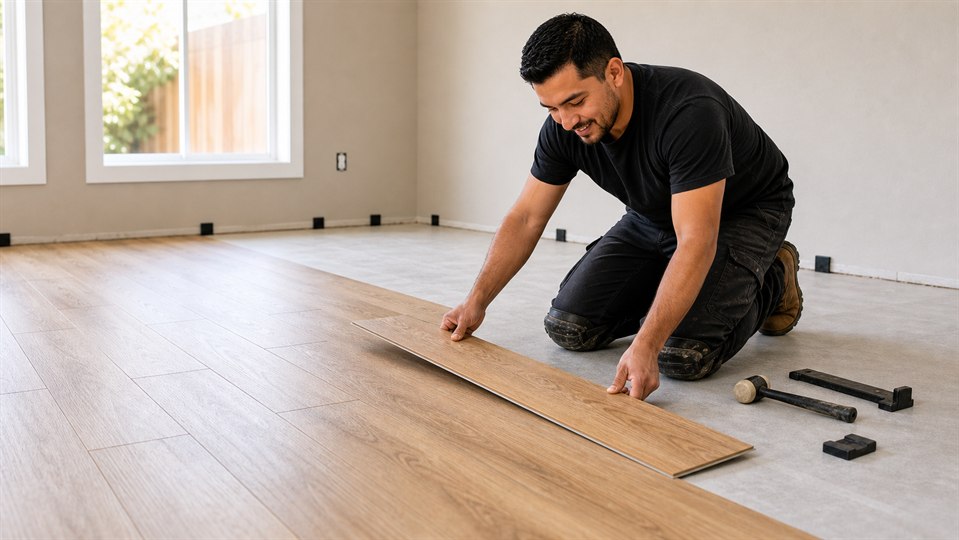
When done, we connect you with vetted local installers for your project.
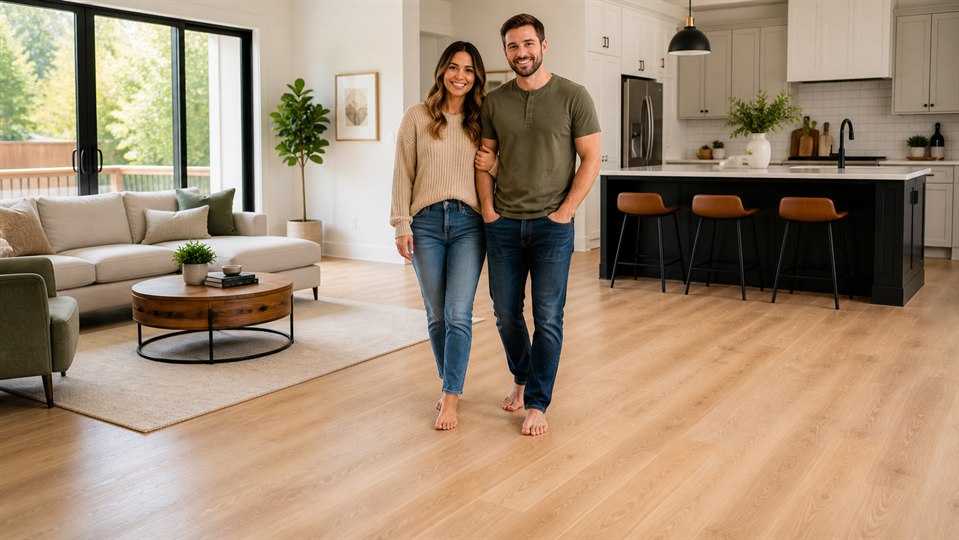
You pay the pro directly and the job is backed by a 1-year labor warranty.
These are labor-only examples to help homeowners in San Francisco sanity-check quotes before material, demo, trim, floor prep, or stairs are added.
A useful planning range before material choice, removal, and subfloor prep are finalized.
A useful planning range before material choice, removal, and subfloor prep are finalized.
A useful planning range before material choice, removal, and subfloor prep are finalized.
Open the calculator for square-foot pricing, project details, and a more tailored estimate for your home.
 Installed vinyl plank flooring inspiration for homeowners comparing projects in San Francisco
In San Francisco, vinyl plank flooring pricing usually moves on prep, transitions, room count, and moisture control more than on labor alone. This page keeps the local cost context tight and useful before a homeowner opens the estimator.
San Francisco has humid months that reach about 82% humidity, summer highs average about 66F, there are about 1.7 days above 90F each year, so spring and fall are usually the easiest seasons for flooring installation while hotter summer periods need more attention to acclimation, storage, and jobsite conditions.
This section should help a homeowner decide faster, not just learn terminology. The goal is to match product, wear layer, and installation method to how homes in San Francisco actually perform.
Core material: limestone powder + PVC + stabilizers
Best for: high traffic areas, commercial light use, over radiant heat, uneven subfloors up to spec
Not ideal for: basement comfort underfoot (hard feel), sound-sensitive apartments without premium underlayment
Expansion rate: low — more stable than WPC across temperature swings
Market trend: dominant and growing — now majority of LVP sold in US
Core material: wood flour or bamboo dust + PVC + foaming agents
Best for: residential comfort underfoot, basement installations, over existing hard floors
Not ideal for: heavy rolling loads, very high heat environments
Expansion rate: medium — more expansion than SPC
Market trend: declining as SPC improves comfort features
For many San Francisco installs, SPC is the safer default recommendation because its lower expansion rate handles heat and humidity swings better than softer floating options.
In most homes, the right wear layer matters more than chasing total plank thickness.
Total plank thickness does NOT equal durability. A 12mm plank with a 6mil wear layer is less durable than an 8mm plank with a 20mil wear layer.
Choose based on subfloor, moisture risk, and stairs—not just installer preference.
Sold in rolls, glued down, no locking system, not planked
Commercial product, requires wax maintenance, glue-down only
HDF core with AC-rated wear layer — NOT vinyl. Sometimes marketed alongside LVP but is a different product category entirely.
Real wood veneer over plywood core — moisture resistant but not waterproof
Vinyl Flooring installation labor in San Francisco starts around $2.75 per square foot and commonly ranges up to about $3.25 per square foot. Material, removal, trim, floor prep, and stairs can increase the final project total.
For resale in San Francisco, the best flooring is usually the option that balances appearance, durability, and broad buyer appeal. Engineered hardwood is often a strong upgrade choice, while luxury vinyl plank works well when you want a more budget-friendly floor that still looks clean and modern.
For most residential use, 12mil is the minimum worth specifying. 20mil is worth the premium in high-traffic areas, kitchens, and homes with pets or children. 6-8mil is builder-grade — fine for a rental flip, not for a long-term home.
SPC (Stone Plastic Composite) has an inorganic stone-powder core — denser, more dimensionally stable, lower expansion rate, harder underfoot. WPC (Wood Plastic Composite) has a foamed organic core — softer underfoot, more sound absorbing, slightly more expansion. SPC now dominates the market.
LVP is rigid — it doesn't conform to the subfloor like sheet vinyl. High spots create stress on locking joints that causes clicking when walked on and eventual joint failure. Low spots create hollow sound and flex that fatigues the locking system. Flatness is the most skipped and most consequential prep step.
Yes, for floating installations — 1/4 inch at all walls, cabinets, and vertical surfaces. This gap is covered by baseboards or quarter round. The floor needs room to expand in heat. Skipping it is the most common cause of buckling.
Almost always one of three things: missing or insufficient expansion gap, installation in extreme heat before HVAC was operational, or installation over cushion-back vinyl. Buckling from extreme heat with proper gaps is rare but can occur in south-facing rooms with unfiltered direct sun.
Usually yes — over single-layer tile, hardwood, or solid-back vinyl — if the existing floor is flat, firmly bonded, and the resulting height stack doesn't create transition problems at doors. Cushion-back vinyl must be removed. Always check for asbestos in pre-1986 resilient flooring before disturbing it.
See broader San Francisco flooring costs, local climate factors, and project conditions that affect installation pricing.
Explore San Francisco flooringCompare labor ranges, prep needs, and install considerations for Hardwood in San Francisco.
Compare costsCompare labor ranges, prep needs, and install considerations for Laminate in San Francisco.
Compare costsStart the local vinyl plank flooring calculator for San Francisco with pricing, square footage, and project details.
Open calculatorCompare a nearby calculator for local pricing and project conditions near San Francisco.
Open calculatorCompare a nearby calculator for local pricing and project conditions near San Francisco.
Open calculatorIn San Jose, humidity can reach about 77%, so luxury vinyl plank is often used to reduce expansion risk and simplify acclimation compared to laminate or solid hardwood.
View San JoseSacramento has climate conditions where humidity can reach about 83% and the area sees about 99.7 days above 90F each year.
View SacramentoMultifamily housing makes up about 54.4% of local housing units in Los Angeles, which can affect access, delivery, work-hour limits, and scheduling.
View Los AngelesWith about 62.1% single-family homes, many projects involve larger continuous areas that can impact layout and labor efficiency.
View Las VegasOpen the FloorAmigo estimator with San Francisco already selected. Address-based pricing, project details, and local pro matching take about 60 seconds.
Start estimate