

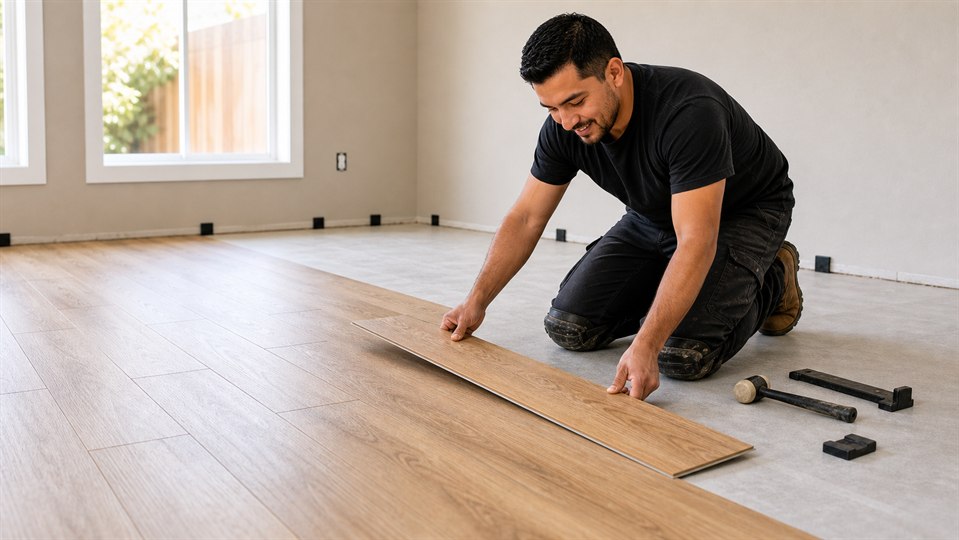

Engineered hardwood
Engineered hardwood project example in Detroit
Often used for upgraded living areas where subfloor flatness, transitions, and acclimation change the final scope.
See your full install cost in about 60 seconds.
It's FREE. No obligation.
Powered by FloorAmigoDetroit is a city in Wayne County, Michigan, within the Detroit-Warren-Dearborn, MI metro area. For flooring projects, that matters because homes in Detroit average about 78 years old, about 64.3% of housing is single-family, median home values are about $83,900, which can affect project scope, material choice, and prep work.
A simple path from price range to finished floors.
We use your home details to create a custom estimate in seconds.
When done, we connect you with vetted local installers for your project.
You pay the pro directly and the job is backed by a 1-year labor warranty.
These are planning examples using local square footage and labor ranges. Once completed-job photos are approved from pro uploads, this section can switch to recent jobs in Detroit.
Engineered hardwood
Often used for upgraded living areas where subfloor flatness, transitions, and acclimation change the final scope.
Laminate
A common budget-friendly plan for bedrooms, offices, and upstairs spaces when jobsite moisture is controlled.
Vinyl plank
Useful for kitchens, living areas, and slab homes where moisture checks matter before a floating install.
Shown as example installs, not completed FloorAmigo jobs yet.
These are labor-only examples to help homeowners in Detroit sanity-check quotes before material, demo, trim, floor prep, or stairs are added.
A useful planning range before material choice, removal, and subfloor prep are finalized.
Open the calculator for square-foot pricing, project details, and a more tailored estimate for your home.
Installed hardwood flooring inspiration for homeowners comparing projects in Detroit
In Detroit, hardwood flooring pricing usually moves on prep, transitions, room count, and moisture control more than on labor alone. This page keeps the local cost context tight and useful before a homeowner opens the estimator.
Detroit has humid months that reach about 76% humidity, summer highs average about 81F, there are about 5.6 days above 90F each year, so spring and fall are usually the easiest seasons for flooring installation while hotter summer periods need more attention to acclimation, storage, and jobsite conditions.
This section should help a homeowner decide faster, not just learn terminology. The goal is to match product, wear layer, and installation method to how homes in Detroit actually perform.
Choose based on subfloor, moisture risk, and stairs—not just installer preference.
Laminate surface is a high-resolution photograph of wood printed on paper. Hardwood surface is actual wood. Laminate cannot be refinished. Hardwood can.
LVP surface is a photographic print on vinyl. No real wood content. LVP is genuinely waterproof. Hardwood is not. LVP cannot be refinished.
Ceramic or porcelain tile — no wood content, fully waterproof. Completely different feel underfoot and installation process.
Bamboo is a grass, not a hardwood species, though it is marketed alongside hardwood. Different hardness profile, different moisture behavior, different refinishing characteristics.
A state-level contractor license is required for residential flooring installation projects over $600, and contractors must register with the Michigan Department of Licensing and Regulatory Affairs. A flooring contractor must register with the City of Detroit Buildings, Safety Engineering, and Environmental Department.
Hardwood Flooring installation labor in Detroit starts around $2.71 per square foot and commonly ranges up to about $3.21 per square foot. Material, removal, trim, floor prep, and stairs can increase the final project total.
For resale in Detroit, the best flooring is usually the option that balances appearance, durability, and broad buyer appeal. Engineered hardwood is often a strong upgrade choice, while luxury vinyl plank works well when you want a more budget-friendly floor that still looks clean and modern.
Both have a real wood surface — the difference is what's underneath. Engineered hardwood has a real wood veneer over a cross-ply plywood or HDF core, making it more dimensionally stable and usable over more subfloor types including concrete. Solid hardwood is a single piece of wood throughout. Both can be refinished — solid more times, engineered once to several times depending on veneer thickness.
Yes. The surface layer is genuine hardwood species — real oak, walnut, hickory, or whatever species is specified. It is not a photograph like laminate or LVP. The core uses plywood or HDF for stability, but the surface you see and touch is real wood.
Yes — one of its key advantages over solid hardwood. Floating installation with vapor barrier or glue-down with moisture-control adhesive are both appropriate methods. A moisture test of the slab is mandatory first.
Neither engineered nor solid hardwood is recommended for below-grade spaces. Basement humidity fluctuations year-round stress real wood in ways that cannot be fully managed. LVP is the correct product for basements.
It depends entirely on veneer thickness. Thin veneer (1-2mm) — one light screen and recoat, if that. Standard veneer (2-3mm) — one to two full refinishes. Thick veneer (4-6mm) — three to five refinishes, comparable to solid hardwood in most homes.
See broader Detroit flooring costs, local climate factors, and project conditions that affect installation pricing.
Explore Detroit flooringCompare labor ranges, prep needs, and install considerations for Laminate in Detroit.
Compare costsCompare labor ranges, prep needs, and install considerations for Vinyl in Detroit.
Compare costsStart the local hardwood flooring calculator for Detroit with pricing, square footage, and project details.
Open calculatorThe median home age in Columbus is about 45 years, so older subfloors, transitions, and prep work can have a bigger effect on scope than homeowners expect.
View ColumbusChicago homes average about 72 years old, which means subfloor prep, leveling, and transition work can affect flooring budgets more often than in newer housing stock.
View ChicagoIndianapolis homes average about 52 years old, which means subfloor prep, leveling, and transition work can affect flooring budgets more often than in newer housing stock.
View IndianapolisMultifamily housing makes up about 27.6% of local housing units in Philadelphia, which can affect access, delivery, work-hour limits, and scheduling.
View PhiladelphiaOpen the FloorAmigo estimator with Detroit already selected. Address-based pricing, project details, and local pro matching take about 60 seconds.
Start estimate