Multifamily housing makes up about 36.6% of local housing units in Danbury, which can affect access, delivery, work-hour limits, and scheduling.
Residents must transport flooring like tile, hardwood, carpet, and vinyl to the city-operated Ferris Avenue drop-off facility for disposal.
Standard flooring replacement in Danbury, CT usually does not require a permit, but permits can come into play when the project includes structural, electrical, or plumbing work.
A flooring contractor is not required to obtain a city business registration or local contractor registration to operate in Danbury, Connecticut.
Danbury has humid months that reach about 76% humidity, summer highs average about 81F, there are about 7.2 days above 90F each year, so spring and fall are usually the easiest seasons for flooring installation while hotter summer periods need more attention to acclimation, storage, and jobsite conditions.
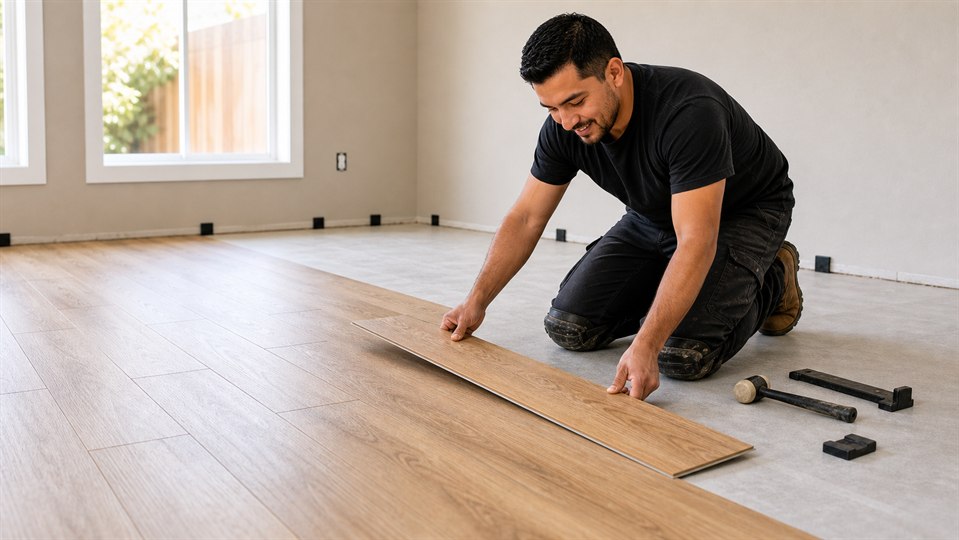
Plank quality, wear layer, and locking system change both material cost and installation pace.
Median home age in this market is about 50 years, so subfloor prep and transitions often matter more than expected.
Local installer notes — Danbury
In Downtown Danbury, many structures built before the 1950s have original plank subfloors that require significant leveling before modern flooring installation. The 49.5 inches of annual rainfall necessitates robust moisture barriers and water-resistant flooring options, especially in basements.